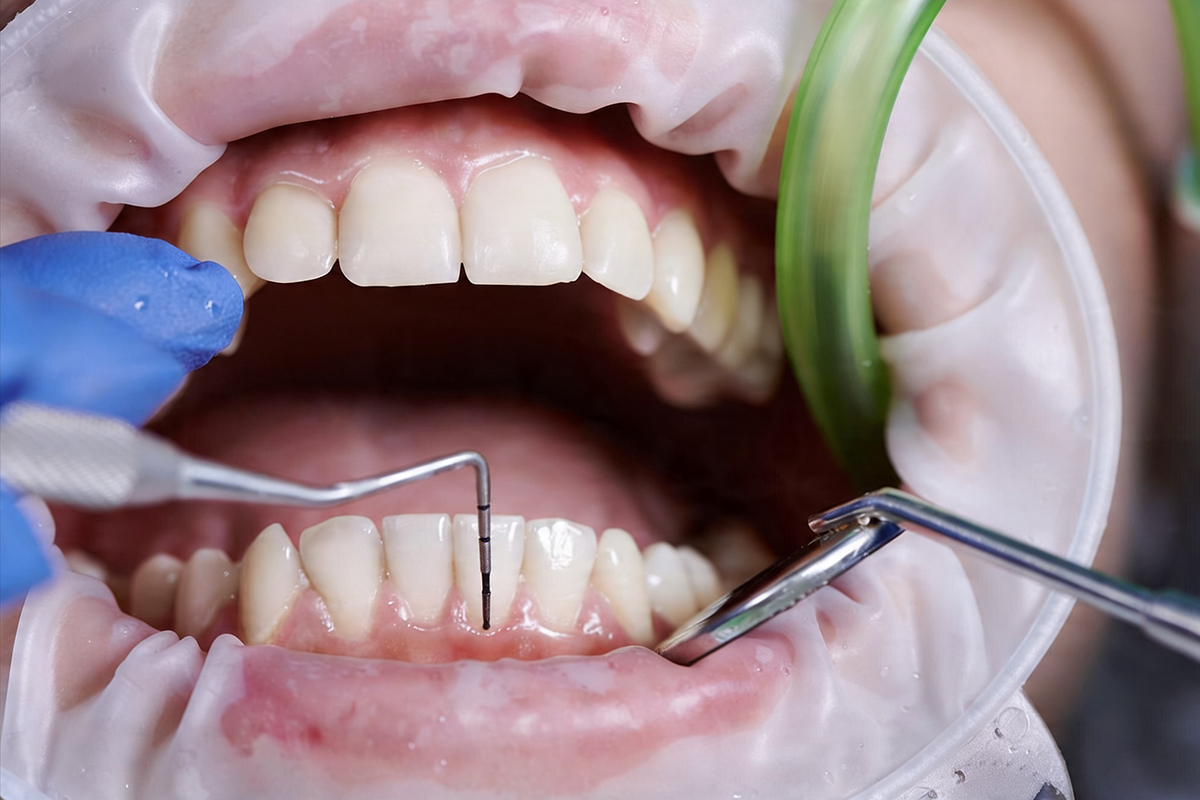
45-90 min
Local anesthesia
Same day
45-90 min
Local anesthesia
Same day
Root planing is a vital procedure, particularly for patients in the early stages of gum disease (periodontitis). This procedure addresses not only the visible part of the tooth but also the root surface beneath the gum line. Unremoved root toxins and bacteria can cause healthy teeth to loosen and eventually fall out. This treatment halts the progression of gum inflammation and eliminates the need for surgical procedures.
Overview


When gum disease progresses beyond a certain stage, standard cleaning methods become insufficient. At this stage, specialists must perform deep cleaning. Root planing in Turkey is suitable for individuals with the following conditions:
As with any procedure, this treatment isn’t suitable for certain cases:
This process, meticulously carried out by the experts at Diş 212, requires more detailed work than a standard cleaning. The goal of this treatment is to remove the invisible threats beneath the gums. Here are the general steps for root planing in Turkey:
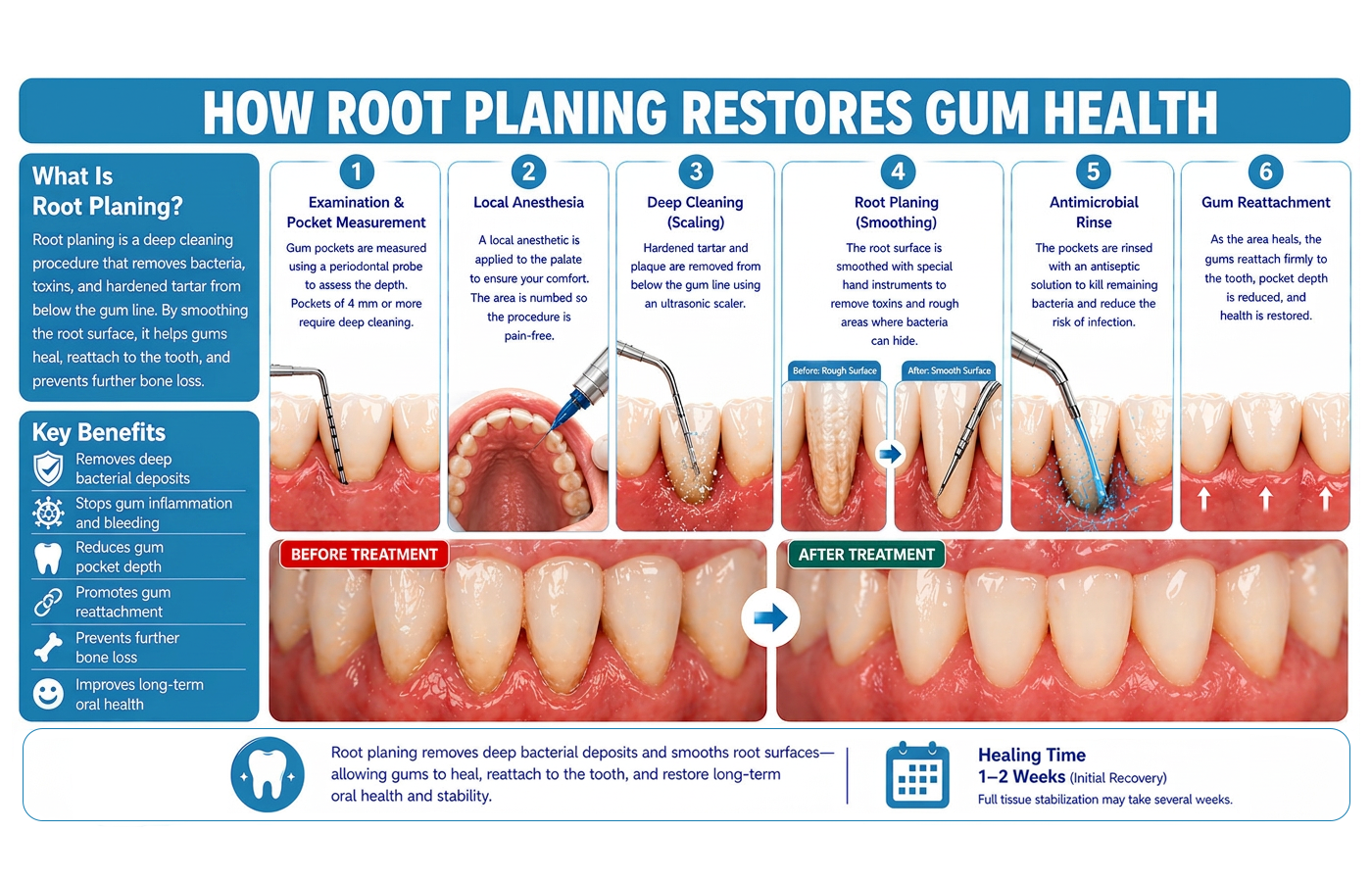
Since the procedure is performed below the gum line, specialists prioritize your comfort. Before the procedure, dentists carefully numb the area with local anesthesia. This step allows dentists to work more precisely and ensures the process is completely stress-free for you.
In the first step, dentists target the hardened tartar and plaque buildup in the gum pockets. They effectively remove these using advanced ultrasonic devices. This procedure isn’t merely a surface cleaning; it is a critical preparatory step to reach the root surface. After this stage, all harmful buildup beneath the gums becomes visible and can be cleaned.
This stage constitutes the most important part of the treatment. Dentists use specialized and delicate hand instruments to reach the root surface. Rough areas on the root, along with bacterial colonies and toxins, are meticulously cleaned. The goal here is to make the root surface as smooth as glass. This smoothness makes it difficult for bacteria to reattach.
Gum pockets are rinsed with special antiseptic solutions to minimize the risk of infection. When deemed necessary, specialists may also apply local antibiotic gels to accelerate healing. These supportive measures significantly enhance the treatment’s success.
At the end of the procedure, the gums are gently pressed against the tooth. The process is completed once bleeding is controlled. Root planing in Turkey ensures safe recovery through numbness management and specialized brushing instructions.

The recovery process after root planing in Turkey is generally quick. However, experiencing some changes in the first few days is natural. 212 Diş clinics provide expert-recommended oral care tools for a seamless and comfortable healing experience. Understanding the expected recovery milestones and essential clinical precautions provides a smoother healing experience:
This procedure is generally safe and non-surgical. However, since dentists intervene deep into the gum tissue, some temporary side effects may occur. Take a look at the general risks associated with root planing:
The recovery process following root planing in Turkey typically proceeds smoothly and comfortably. You will clearly feel the effects of the treatment both in the short and long term. You can resume your daily activities immediately after the procedure. However, it is quite normal to experience mild tooth sensitivity for the first few days. Yükleniyor…
Your gums will begin to heal visibly after the treatment. The previously swollen and inflamed tissues give way to a healthier appearance. Bleeding complaints decrease significantly and often disappear entirely in most patients. As this healing process progresses, gum pockets shrink, making it harder for bacteria to accumulate again.
Scaling cleans only the part of the tooth above the gum line, while root planing cleans and smooths the tooth roots.
No. Since the procedure is performed under local anesthesia, you won't feel any pain during the procedure.
Specialists recommend this procedure when gum pockets reach a critical depth. In such cases, routine professional cleaning is no longer sufficient to maintain oral health.
This depends on the number of affected areas in the mouth. Generally, 1 or 2 sessions may be required for the entire mouth. Each session lasts approximately 30–45 minutes.
You may experience mild gum sensitivity and very slight gum recession during the recovery process.
Yes. When the bacteria on the root surface are removed, the gum tissue reattaches to the tooth. This stops inflammation and prevents the disease from causing bone loss.
Dr. Dt. Buse Başak Feyizoğlu provides medical review for content focused on periodontology, gum health, periodontal disease management, scaling, root planing, gingival treatments, and periodontal surgical care.
Medically reviewed by
Dr. Dt. Buse Başak Feyizoğlu
Published
May 8, 2026
Last medically reviewed on
July 4, 2026
Periodontist



We provide structured, patient-focused dental care across general, cosmetic, and specialist treatments.
EURO BANK ACCOUNT INFORMATION
NAME: AK 212 BAYRAMPAŞA DİŞ SAĞLIĞI HİZM.
IBAN: TR17 0006 2000 7360 0009 0780 69
SWIFT: TGBATRIS736


Last Update: July 4, 2026
Content Editor: Veysel Koyuncu, Email: kcveysel97@gmail.com
Telephone: +90 549 430 40 64
Copyright © 2026 All Rights Reserved. Digital Solutions by Digiduction

How can we help you?
Fill out the form below and our team will get back to you shortly.
Your request has been sent successfully.
Our team will contact you as soon as possible.