30-60 Dakika
Lokal Anestezi
Aynı Gün
30-60 Dakika
Lokal Anestezi
Aynı Gün
Dental curettage focuses not on the tooth itself, but on the inner lining of the gum. When the gum pocket deepens, the tissue inside the pocket remains chronically inflamed, preventing healing cells from reaching the area. This procedure removes the diseased tissue, acting as a barrier, and triggers the body’s natural healing mechanism. Yükleniyor…
Overview


Not all gum problems are of the same severity. In some cases, only a superficial cleaning is sufficient, while in others, surgical intervention may be necessary. Generally, take a look at the ideal candidates for dental curettage in Turkey:
In some cases, curettage alone may not be sufficient or may be considered risky:
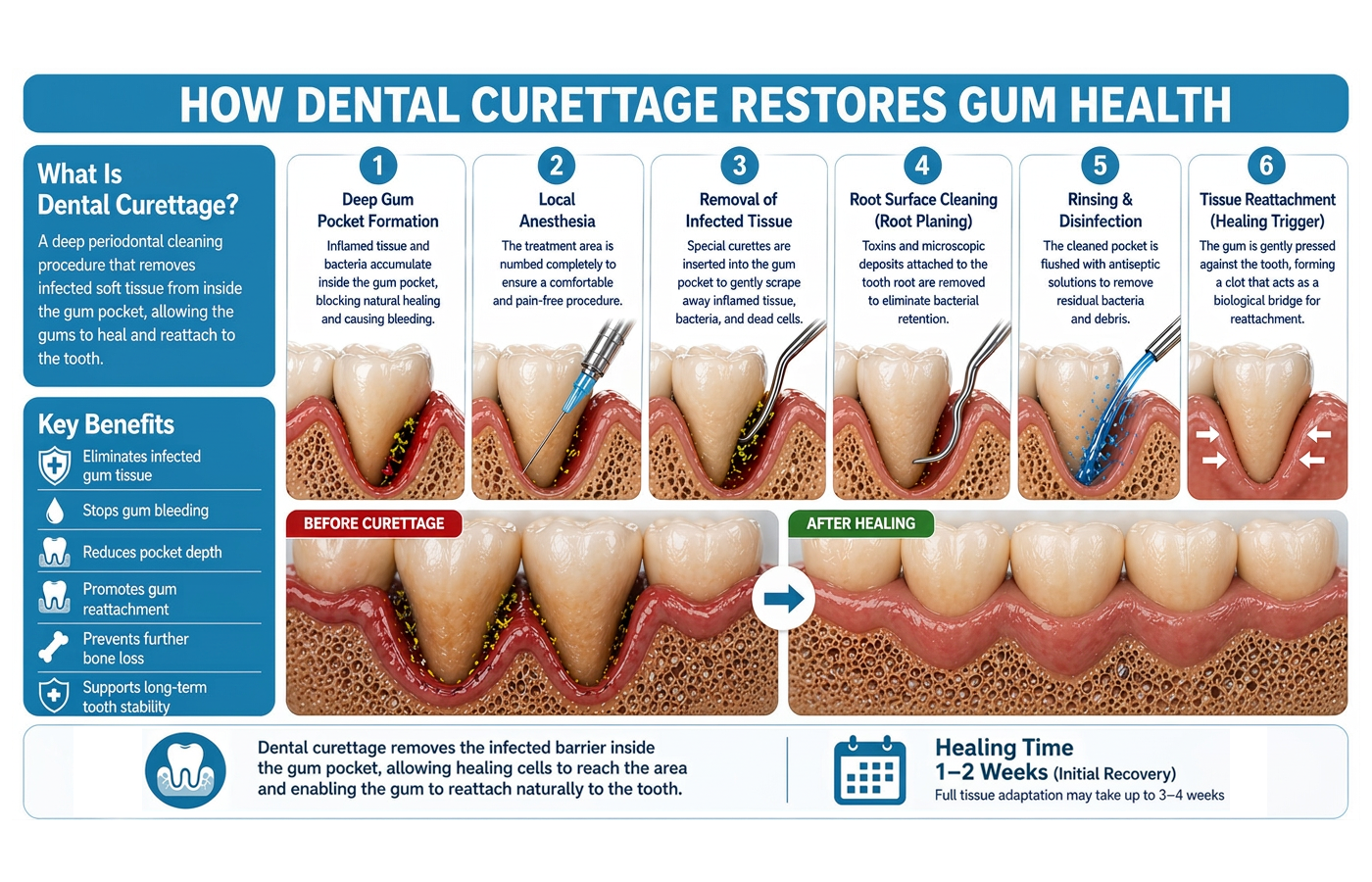
This procedure goes beyond standard surface cleaning; it involves the biological reset of the gum pocket. At Diş 212 clinic, this procedure is performed with precision, targeting only the diseased tissues without damaging the internal structure of the gums. Here is the step-by-step dental curettage process:
Local anesthesia is applied to the treatment area to numb the nerve endings completely. This ensures that this in-depth treatment process becomes a completely comfortable and stress-free experience for you.
This stage is the most critical and specialized part of the procedure. Dentists use micro-instruments with spoon-shaped, extremely sharp tips. This instrument is inserted into the gum pocket and applied to the inner surface of the visible gum tissue. Dead cells, inflamed granulation tissue, and bacteria that have accumulated there are gently scraped away.
Specialists typically combine this procedure with root planing. While the soft tissue is being cleaned, microscopic calculus and toxins adhering to the tooth root are also removed.
After the physical cleaning is complete, the microscopic cleaning phase begins. The cleaned pockets are rinsed under pressure with special antiseptic solutions. This rinsing ensures that bacteria released during the scraping process are completely removed from the mouth.
For the procedure to be successful, the cleaned tissue must adhere firmly to the tooth. Dentists gently press the cleaned gum tissue onto the tooth using their fingers. This pressure facilitates the formation of a thin blood clot between the tissue and the tooth root. This clot serves as the biological bridge necessary for the gum to reattach to the root.
In this procedure, which generally doesn’t require stitches, the gums naturally conform to the tooth’s shape, and healing begins immediately.

The rate of tissue recovery after dental curettage in Turkey is quite high due to the procedure’s non-surgical nature. However, the success of this intervention on the inner wall of the gum depends on the care taken during the first week of the adaptation period. During the recovery process after dental curettage, you may experience the following:
Although this procedure, performed at Diş 212, is safe, since it involves intervention in the deep tissues of the gums, you may experience some temporary side effects. Rare risks associated with dental curettage include:
Once dental curettage in Turkey treatment is completed, a biological regeneration process begins for your gums. This procedure isn’t merely a one-day cleaning but a therapeutic intervention aimed at eliminating infection deep within the tissues.
The fastest and most tangible improvement after treatment is the cessation of bleeding. Persistent bleeding that occurred during brushing or eating before the procedure completely disappears within 1–2 weeks following the removal of infected tissue.
The primary long-term goal of the treatment is to prevent tooth loss. Since the destruction of the gum tissue is halted through curettage, the resorption of the jawbone is prevented. This is the most critical line of defense, preventing your teeth from becoming loose or stabilizing any mild looseness.
Dental curettage is the removal of infected soft tissue from within the gum pocket. Required for deep inflammation when standard cleaning isn’t enough, and for persistent gum swelling.
While root planing smooths the surface of the tooth root, this procedure removes diseased tissue from the inner surface of the gum. These procedures can generally be performed during the same session to complement each other.
No. Thanks to local anesthesia, the procedure is completely comfortable. Once the numbness wears off, you may experience mild soreness and sensitivity that can last for just a few days.
The procedure typically takes between 30 and 60 minutes, depending on the number of treatment areas.
You may experience mild gum sensitivity and some discomfort for a few days after the procedure. However, these symptoms will subside quickly.
Yes. Since the infection has been cleared, tissue breakdown stops, the gums reattach to the tooth, and tooth loss is prevented.
Dr. Dt. Buse Başak Feyizoğlu provides medical review for content focused on periodontology, gum health, periodontal disease management, scaling, root planing, gingival treatments, and periodontal surgical care.
Medically reviewed by
Dr. Dt. Buse Başak Feyizoğlu
Published
May 8, 2026
Last medically reviewed on
July 4, 2026
Periodontist


We provide structured, patient-focused dental care across general, cosmetic, and specialist treatments.
EURO BANK ACCOUNT INFORMATION
NAME: AK 212 BAYRAMPAŞA DİŞ SAĞLIĞI HİZM.
IBAN: TR17 0006 2000 7360 0009 0780 69
SWIFT: TGBATRIS736


Last Update: July 4, 2026
Content Editor: Veysel Koyuncu, Email: kcveysel97@gmail.com
Telephone: +90 549 430 40 64
Copyright © 2026 All Rights Reserved. Digital Solutions by Digiduction

How can we help you?
Fill out the form below and our team will get back to you shortly.
Your request has been sent successfully.
Our team will contact you as soon as possible.