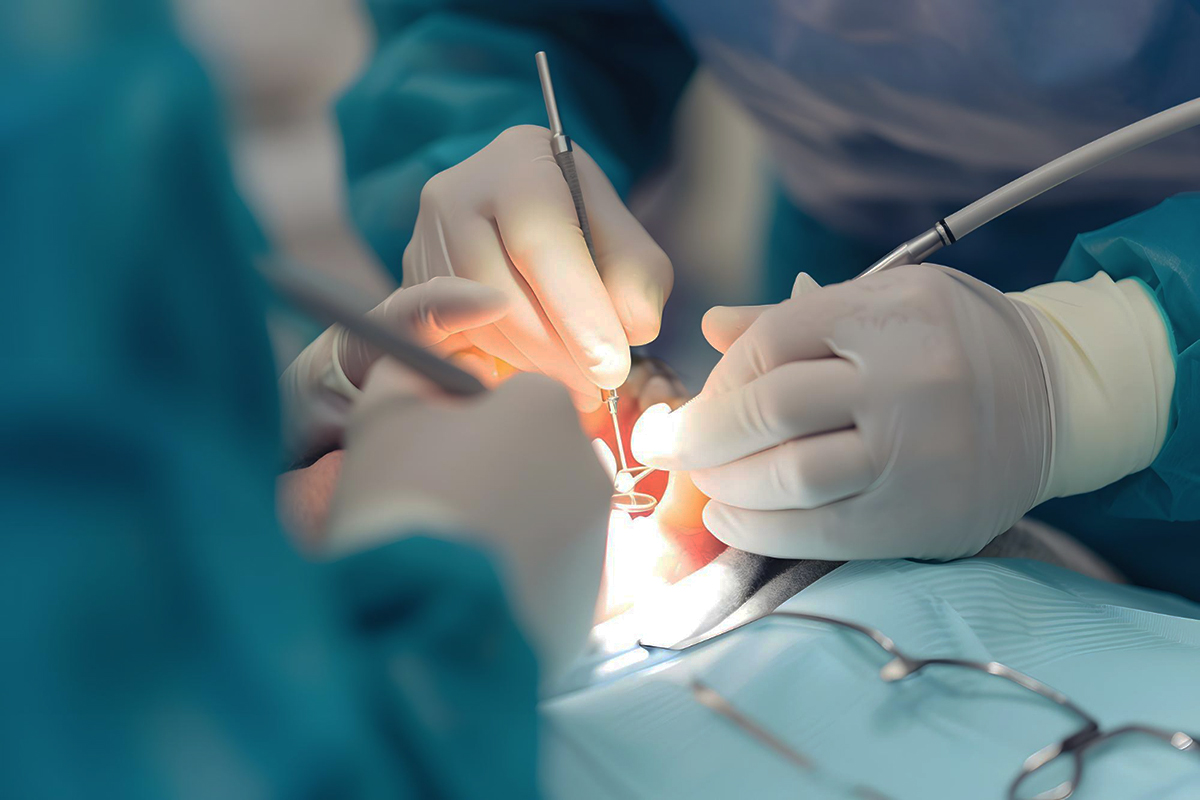
1-2 hours
Local anesthesia
Same day
1-2 hours
Local anesthesia
Same day
When gum disease begins to affect the bone, standard cleaning methods may prove insufficient. At this stage, periodontal flap surgery– lifting the gums to clean the root surgery- is the most effective treatment. Yükleniyor…
Overview


Periodontal flap surgery in Turkey is preferred in advanced stages where non-surgical methods (curettage and root planing) are insufficient. Individuals with the following conditions require this advanced surgical intervention to prevent tooth loss:
Due to the nature of surgical intervention, this procedure may be considered risky or postponed in certain cases:
At Diş 212 clinics, this procedure is performed using a microsurgical technique to completely resolve gum disease. Going beyond a standard dental cleaning, this procedure is carried out in the following stages: Yükleniyor…
The area to be operated on is completely numbed using modern anesthesia techniques. This advanced surgical intervention ensures the patient experiences no pain or discomfort. The area is sterilized and prepared for the surgical procedure.
Millimeter-precise and controlled incisions are made in the gum tissue. The gum tissue is gently separated from the tooth and the underlying jawbone like a flap. This procedure allows the dentist to directly view root surfaces and bone pockets that would otherwise be hidden.
This stage is the most critical part of periodontal flap surgery in Turkey. Stubborn tartar on the root surfaces and inflamed tissue are removed using specialized surgical instruments. The tooth roots are made smooth and sterile enough to prevent bacteria from adhering.
After cleaning and repair, the gum tissue is repositioned at an optimal angle to the root surfaces and bone. Typically, the tissue is adapted slightly above or below its original position to ensure tighter adhesion. Stitches placed with fine surgical sutures seal the area from external factors and initiate healing.

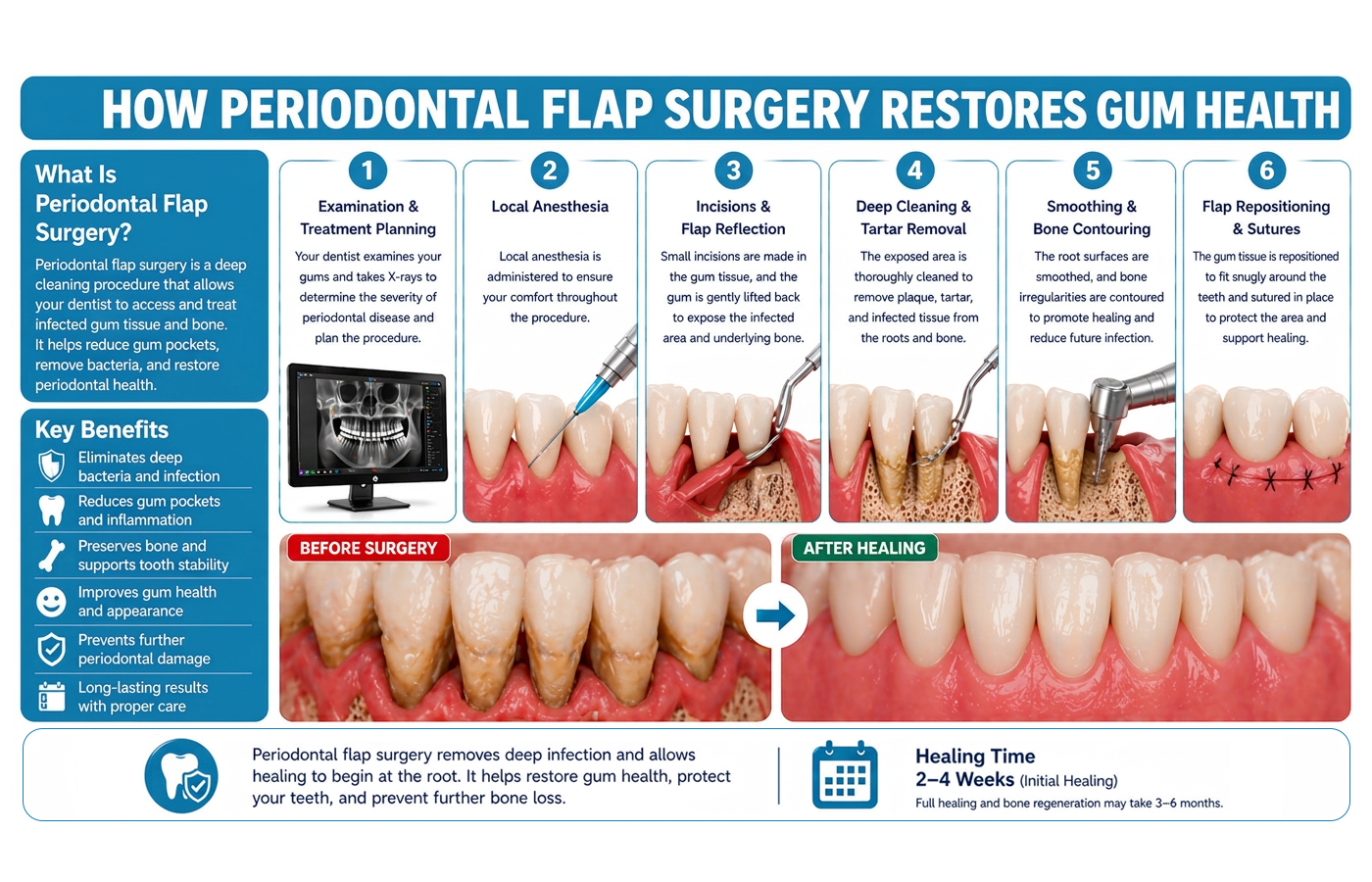
After the procedure, it takes a little patience for the tissues to reattach firmly to the tooth root and bone. Thanks to the micro-surgical techniques applied by the experts at Diş 212, this process progresses predictably. During recovery, you may experience the following and should keep these points in mind:
Since this is a surgical procedure, some temporary, rarely occurring complications may occur. Generally, review the risks associated with periodontal flap surgery:
The primary goal of periodontal flap surgery in Turkey is to protect bone tissue and permanently halt the progression of periodontal disease. Following the flap procedure, the gum pockets significantly narrow. The gums attach more firmly to both the tooth and the underlying bone tissue. This makes it difficult for bacteria to accumulate again, thereby contributing significantly to long-term oral health.
You may experience mild tenderness and discomfort during the first few days of the healing process. However, this is temporary and can be quickly managed with the care routine recommended by your dentist. Within approximately 1–2 weeks, the gums begin to heal and take on a healthier, pink appearance.
Periodontal flap surgery is a procedure in which the gum tissue is surgically opened to remove deep infections around the bone.
It is recommended when standard cleaning is ineffective, such as when pockets are deeper than 6 mm or advanced bone loss is present.
Since the procedure is performed under local anesthesia, you will not feel any pain. Although there may be some mild discomfort afterward, it can be easily managed with pain relievers.
The recovery process is usually largely complete within 1 to 2 weeks. However, it may take several weeks for the tissues to fully heal.
It is expected that the gum swelling will subside and the tissues will take on a healthier appearance.
Yes, it completely clears the current infection. However, for the results to be long-lasting, the patient must strictly maintain good oral hygiene.
Dr. Dt. Buse Başak Feyizoğlu provides medical review for content focused on periodontology, gum health, periodontal disease management, scaling, root planing, gingival treatments, and periodontal surgical care.
Medically reviewed by
Dr. Dt. Buse Başak Feyizoğlu
Published
May 8, 2026
Last medically reviewed on
July 4, 2026
Periodontist


We provide structured, patient-focused dental care across general, cosmetic, and specialist treatments.
EURO BANK ACCOUNT INFORMATION
NAME: AK 212 BAYRAMPAŞA DİŞ SAĞLIĞI HİZM.
IBAN: TR17 0006 2000 7360 0009 0780 69
SWIFT: TGBATRIS736


Last Update: July 4, 2026
Content Editor: Veysel Koyuncu, Email: kcveysel97@gmail.com
Telephone: +90 549 430 40 64
Copyright © 2026 All Rights Reserved. Digital Solutions by Digiduction

How can we help you?
Fill out the form below and our team will get back to you shortly.
Your request has been sent successfully.
Our team will contact you as soon as possible.