Preloader

Porcelain Veneers

  1. Home
  2. Cosmetic Dentistry
  3. Porcelain Veneers
Duration of Procedure

5–7 days

Type of Anesthesia

Local anesthesia

Length of Stay

4–6 nights

Duration of Procedure

5–7 days

Type of Anesthesia

Local anesthesia

Length of Stay

4–6 nights

The Aesthetic Power of Porcelain Veneers

Porcelain veneers are thin ceramic shells bonded to the front surfaces of the teeth. They provide aesthetic results that closely resemble the natural structure of the teeth. Requiring minimal preparation, this method is a minimally invasive cosmetic treatment.

Overview

  • Purpose: To improve the color and size of the teeth, helping achieve a more natural-looking surface.
  • Logic: It involves bonding very thin porcelain layers to the front surfaces of the teeth using specialized techniques.
  • Procedure: It consists of tooth preparation, laboratory fabrication, and final placement.
  • Suitability: Ideal for patients with discoloration, mild misalignment, or worn-down teeth.
  • Durability: Proper care and regular check-ups ensure an aesthetic lifespan of 10–15 years.
  • Effect: A smile that is fully harmonious with the other teeth and looks natural.

Which Patients are Suitable for Porcelain Veneers?

This procedure is suitable for individuals with aesthetic concerns who don’t have significant dental issues. However, it may not be ideal for every patient. Therefore, a detailed evaluation must be conducted before treatment. Here are the ideal candidates for porcelain veneers in Turkey:

  • Permanent discoloration: Root canal treatment or antibiotic use can cause deep stains on teeth. These stains don’t fade with whitening. This procedure completely masks these issues.
  • Shape and size irregularities: You may have genetically small or pointed teeth. This can disrupt the smile line. This method restores a balanced and ideal shape to the teeth.
  • Worn-down and chipped teeth: Aging or trauma can wear down the tips of teeth. Small chips can compromise aesthetics. With veneers, the shape and function of the teeth are restored in seconds.
  • Gaps between teeth: There may be unsightly gaps between the teeth. Orthodontic treatment isn’t always necessary for this condition. These gaps can be closed quickly with this procedure.
  • Mild misalignment: Orthodontic treatment is a lengthy process. Mild misalignments can be corrected with an aesthetic illusion. This method can quickly improve the appearance of alignment issues.

The following conditions aren’t suitable for porcelain veneer application:

  • Bruxism: This problem can cause veneers to crack or fall off. In such cases, protective treatments like a night guard or Botox are required first.
  • Advanced gum disease: It isn’t recommended for those with receding gums or infection. Periodontal health must be restored before addressing aesthetics.
  • Insufficient enamel layer: Veneers bond to the tooth enamel. If the enamel layer is excessively worn, the porcelain will not adhere strongly to the tooth.
  • Severe misalignment and bite issues: This treatment isn’t recommended when teeth press against each other at extreme angles. In such cases, porcelain veneers are unsuitable as they would be subjected to excessive stress. Orthodontic treatment may be more appropriate.

How are Porcelain Veneers Applied?

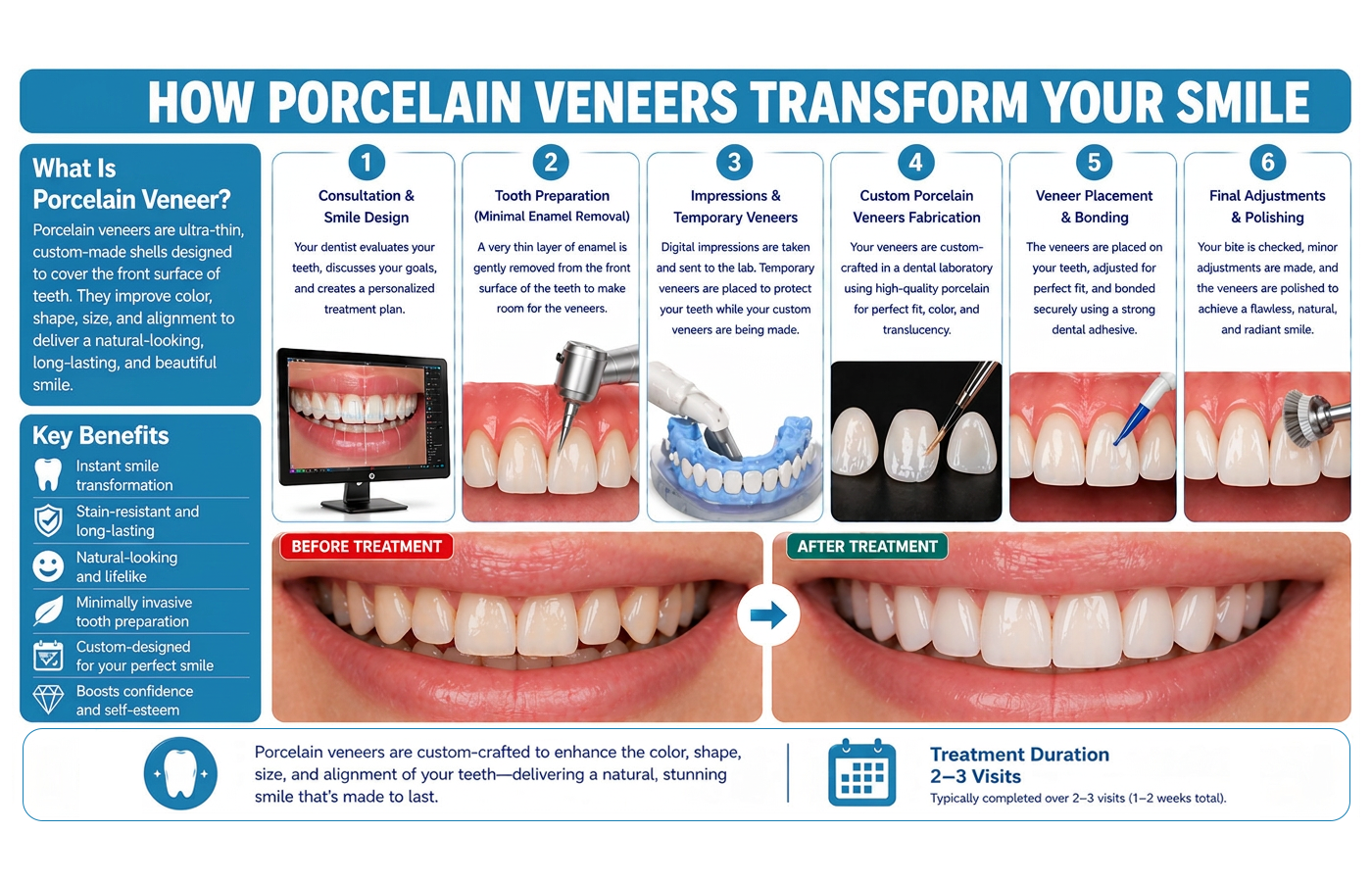
This procedure consists of several carefully planned stages. During the process, the natural structure of the teeth is preserved. The procedure for a porcelain veneer in Turkey consists of the following steps:

  • Analysis, digital design, and preparation

First, photographs and 3D scans of the teeth are taken at Diş 212. A smile that suits your facial features is designed digitally. A very thin layer (0.3–0.5 mm) is removed from the front surface of the teeth. This ensures the veneers sit flush with the tooth.

  • Digital impression and laboratory production

A precise digital impression of the prepared teeth is taken. The data is sent to the laboratory. During this time, temporary veneers are placed to protect your teeth. Custom porcelain veneers are produced using CAD/CAM technology. In this stage, color and translucency details are refined with millimeter precision.

  • Fitting and final bonding

The prepared veneers are permanently bonded to the tooth surface using specialized adhesives (bonding agents). After this procedure, the veneers integrate with the tooth, resulting in a natural appearance.
porcelain-veneers
This illustration uses 3D educational visuals to explain the main stages of Porcelain Veneers. It does not show actual surgical or clinical photographs.

How Does Recovery After Veneers Progress?

Recovery after porcelain veneers in Turkey is generally quick and comfortable. Since the procedure is minimally invasive, patients can often return to their daily lives the same day. Review the situations you may encounter and care instructions during the recovery process after treatment:

  • It may take a few days to get used to the new tooth shapes. You can practice speaking to help your tongue and lip muscles adjust.
  • Due to tooth preparation, mild sensitivity may occur for the first 2–3 days. This is temporary. Desensitizing toothpaste can help ease the process.
  • The lifespan of veneers depends on gum health. Regular brushing and flossing should not be neglected. An interdental brush supports oral hygiene.
  • Porcelain veneers are resistant to vertical forces. However, you should avoid biting down on hard objects with your teeth. Biting your nails or chewing on a pen can damage the veneers.
  • If you grind your teeth while sleeping, you should wear a night guard. This guard prevents the veneers from breaking under excessive pressure.
  • You should visit the dentist for a check-up every 6 months. During these check-ups, the fit of the veneers and gum health are monitored.

What Risk Factors Affect Porcelain Veneer Outcomes?

As with any dental treatment, this procedure may carry some risks. Also, these risks can be minimized with proper planning. Here are the risks associated with porcelain veneers:

  • Sensitivity issues: Since enamel is removed during the procedure, temperature sensitivity may occur afterward.
  • Fractures and cracks: Although porcelain veneers are very thin and aesthetic, they are sensitive to excessive force. Using your front teeth to break hard foods can cause the porcelain to crack.
  • Veneer loss (detachment): A veneer may come loose due to a very hard impact. In this case, the veneer must be professionally reattached.
  • Color mismatch: Veneers don’t stain. However, your natural teeth next to them may change color over time. This can create a color difference between the veneers and natural teeth over time.
  • Secondary tooth decay: If oral hygiene is neglected, plaque can accumulate at the gum line where the veneer ends. This can lead to new cavities in the natural tooth structure beneath the veneer.

What Occurs During Recovery?

After treatment is completed, the teeth achieve a whiter and more aesthetically pleasing appearance. Veneers have light-transmitting properties similar to natural teeth. This ensures that an artificial appearance doesn’t develop.

Patients typically notice the change in their smile immediately. The size, shape, and color of the teeth become more harmonious. This contributes positively to overall facial aesthetics.

With proper care, porcelain veneers can last for many years. The materials used today are durable and maintain their aesthetic properties. In particular, more predictable results are achieved thanks to digital planning.

Frequently Asked Questions

Porcelain veneers are very thin ceramic shells bonded to the front surface of the teeth. They conceal dental imperfections and provide a lasting aesthetic result.

It is suitable for adults with discolored or misaligned teeth who have healthy gums.

With regular oral hygiene, the lifespan of veneers is typically 10 to 15 years.

The treatment is typically carried out using local anesthesia. Therefore, you will not feel any pain. You may experience some mild discomfort afterward.

It doesn’t require special care. Also, you should avoid biting hard objects and make sure to brush them regularly.

Yes. If a veneer breaks or comes loose, it can be remade and reattached.

Medically reviewed by
Dt. Emre Çamlıöz

He serves patients, especially in endodontics and Aesthetic Dentistry, Bleaching (Bleaching) systems, 1-Day Dental Treatment (CAD-CAM), Gingival Diseases and Health, plus Smile Design.

Medically reviewed by
Dt. Emre Çamlıöz

Published
May 8, 2026

Last medically reviewed on
July 1, 2026

Dt. Emre Çamlıöz

Cosmetic Dentistry

Destek